

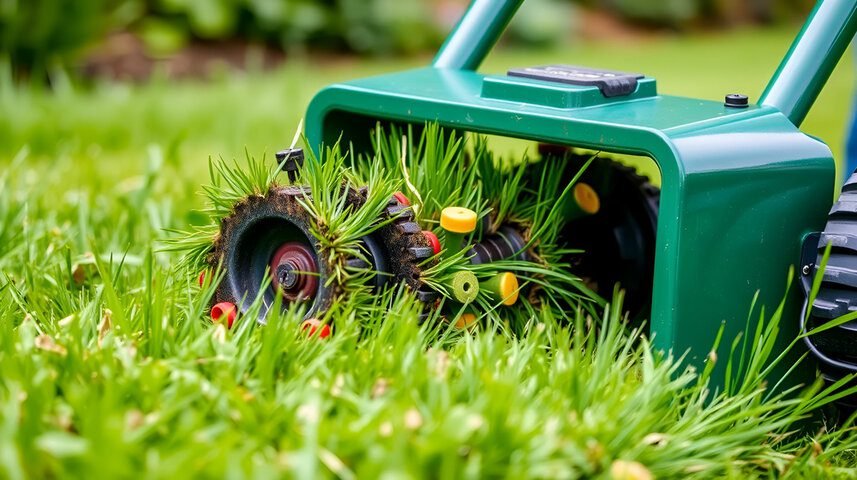
A thick, green lawn does not happen by accident. Beneath the surface of every healthy yard is a strong root system that anchors the grass, absorbs nutrients, and withstands Virginia’s changing weather patterns. For homeowners in Richmond, Mechanicsville, Midlothian, Chester, Goochland, Tuckahoe, Short Pump, and Glen Allen, core aeration is one of the most important services for developing those deep, resilient roots.
At Lawn Popper’s, we provide professional residential lawn care and landscaping services designed specifically for the soil conditions and climate of Central Virginia. Core aeration is a foundational treatment that supports everything from mowing and fertilization to overseeding and seasonal yard cleanups. When performed at the right time and in the right way, it transforms compacted soil into an environment where grass can truly thrive.
This guide explains how core aeration works, why it is essential for stronger roots, and how homeowners throughout the Richmond region can benefit from incorporating it into a consistent lawn care plan.
Why Compacted Soil Weakens Your Lawn Over Time
Soil compaction is one of the most common reasons lawns struggle in the Richmond area. Heavy clay soils, frequent foot traffic, mowing equipment, and natural settling all press soil particles tightly together. Over time, this density restricts airflow, water movement, and nutrient absorption.
When soil becomes compacted, grass roots have difficulty pushing deeper into the ground. Instead of spreading down and out, they remain shallow and weak. Shallow roots make lawns more vulnerable to drought, heat stress, disease, and weed invasion. This is especially noticeable during hot Virginia summers when turf in places like Midlothian or Short Pump can quickly turn thin or brown.
Compacted soil creates several problems beneath the surface:
- Reduced oxygen availability for root respiration
- Poor drainage and increased runoff
- Limited nutrient movement into the root zone
- Increased thatch buildup at the surface
- Greater susceptibility to weeds and lawn disease
Many homeowners attempt to correct these issues with additional watering or fertilizer. While those treatments can help temporarily, they do not address the root cause. Without improving soil structure, grass simply cannot develop the strong foundation it needs to thrive.
In high-traffic residential neighborhoods across Glen Allen and Mechanicsville, soil compaction can become severe within just a few seasons. Children playing, pets running, and routine mowing all contribute to gradual soil compression. Even healthy-looking lawns may be struggling below ground.
Signs that compaction may be weakening your lawn include:
- Water pooling after rainfall
- Hard soil that is difficult to penetrate with a screwdriver
- Thin or patchy grass growth
- Increased weed pressure
- Turf that browns quickly during dry spells
Understanding the role of soil health is the first step toward building stronger roots. Core aeration directly addresses compaction and restores the conditions grass needs to grow deeper and stronger.
What Core Aeration Actually Does Below Ground
Core aeration is a mechanical process that removes small plugs of soil from the lawn. Unlike spike aeration, which simply pokes holes into the ground, core aeration physically extracts cylinders of soil. This creates open channels that allow air, water, and nutrients to move freely into the root zone.
For homeowners in Richmond and surrounding communities, this process is particularly beneficial because many local soils contain a high clay content. Clay particles are small and tightly packed, making compaction more likely. By removing soil cores, aeration loosens the structure and increases pore space underground.
Below the surface, several important changes begin to occur:
- Oxygen levels increase around the roots
- Water penetrates more evenly and deeply
- Nutrients reach deeper soil layers
- Microbial activity improves
- Thatch begins to break down naturally
Each of these factors contributes directly to stronger root development. Grass roots require oxygen to function properly. When soil is compacted, oxygen flow is restricted, limiting growth. Aeration restores that airflow and revitalizes root activity.
Another critical benefit of core aeration is improved water absorption. Instead of running off the surface or pooling in low areas, rainfall and irrigation soak into the soil. This deeper moisture availability encourages roots to grow downward in search of water, strengthening the turf’s overall resilience.
Homeowners often notice visible improvements within weeks of aeration, including:
- More uniform green color
- Thicker grass growth
- Better drought tolerance
- Reduced surface thatch
- Enhanced response to fertilization
At Lawn Popper’s, we use professional-grade aeration equipment to ensure proper plug depth and spacing. This precision is essential for maximizing benefits while minimizing surface disruption. The small soil plugs left behind break down naturally and return nutrients to the lawn.
Core aeration works quietly below ground, but its long-term impact on root health is significant.
How Aeration Boosts Root Depth and Strength
Strong roots are the foundation of a healthy lawn. Without them, grass remains vulnerable to environmental stress and mechanical damage. Core aeration stimulates root growth by creating ideal conditions for expansion.
When soil is loosened and oxygen becomes available, roots begin to explore deeper layers. This vertical growth is critical for stability and nutrient access. In areas like Goochland and Chester, where seasonal rainfall patterns can fluctuate, deeper roots help lawns endure both wet and dry conditions.
Aeration supports root strength in several measurable ways:
- Encourages deeper root penetration
- Increases root mass and density
- Improves nutrient uptake efficiency
- Enhances resistance to heat and drought
- Strengthens turf against foot traffic
As roots expand into newly opened soil channels, they encounter less resistance. This reduced compaction allows for more branching and thickening. The result is a denser root network that anchors grass securely in place.
Deeper roots also access nutrients that may be unavailable near the surface. Over time, this balanced nutrient absorption promotes even growth and richer color. Lawns that receive regular aeration often respond more effectively to fertilization programs.
In Richmond’s humid summers, lawns with shallow roots can struggle under high temperatures. Heat stress often leads to thinning and increased weed intrusion. Stronger, deeper roots help turf maintain moisture levels and recover more quickly after stress events.
Homeowners frequently report the following after consistent aeration treatments:
- Improved lawn thickness year over year
- Reduced bare patches
- Better tolerance to summer heat
- More consistent growth patterns
- Less dependency on frequent watering
By focusing on root health rather than surface appearance alone, aeration creates lasting improvements that extend well beyond a single season.
The Best Time to Aerate Lawns in Richmond
Timing plays a major role in the success of core aeration. In the Richmond, Virginia region, cool-season grasses such as tall fescue are most common in residential lawns. These grasses experience peak growth during early fall and spring.
Early fall is widely considered the ideal time for aeration in Central Virginia. Soil temperatures remain warm enough to encourage root growth, while cooler air temperatures reduce stress on the turf. This combination allows grass to recover quickly and expand into the newly opened soil spaces.
Benefits of fall aeration include:
- Rapid root regeneration
- Reduced competition from summer weeds
- Stronger preparation for winter dormancy
- Improved results when combined with overseeding
- Better moisture retention during seasonal transitions
Spring aeration can also be effective, particularly for lawns showing signs of severe compaction. However, fall generally produces the most consistent long-term results for cool-season turf in neighborhoods across Tuckahoe and Glen Allen.
Weather conditions should also be considered. Soil should be moist but not saturated at the time of aeration. Proper moisture levels allow equipment to extract clean soil plugs without causing unnecessary surface disturbance.
When scheduling aeration, homeowners often consider:
- Current lawn health and thickness
- Recent rainfall patterns
- Planned overseeding projects
- Upcoming landscaping improvements
- Seasonal maintenance schedules
At Lawn Popper’s, we help homeowners determine the most appropriate timing based on their property’s specific conditions. Because we are based in the Richmond area, we understand how local climate patterns influence turf performance.
Strategic timing ensures that aeration delivers maximum benefits for root development and overall lawn health.
Pairing Aeration With Overseeding for Results
Core aeration and overseeding work exceptionally well together. Aeration prepares the soil, and overseeding introduces fresh grass varieties that enhance density and durability. This combination is particularly effective for lawns that have thinned due to summer stress or foot traffic.
When aeration removes soil plugs, it creates ideal seed-to-soil contact. Seeds settle into the open holes and are protected from wind, runoff, and excessive drying. This significantly improves germination rates compared to seeding on compacted ground.
Advantages of combining aeration with overseeding include:
- Improved seed-to-soil contact
- Higher germination success
- Increased lawn density
- Enhanced resistance to weeds
- Better long-term root structure
For homeowners in Mechanicsville and Midlothian, overseeding after aeration can restore thin lawns and introduce improved turf varieties suited to Virginia’s climate. New seedlings benefit from the loosened soil and increased nutrient availability.
A thicker lawn also helps crowd out weeds naturally. As grass density increases, sunlight has less opportunity to reach weed seeds. Over time, this creates a more uniform and resilient turf surface.
When planning an aeration and overseeding service, important steps include:
- Selecting appropriate grass seed blends
- Maintaining consistent watering during germination
- Avoiding heavy foot traffic temporarily
- Scheduling follow-up mowing at the proper height
- Monitoring nutrient needs
Lawn Popper’s provides coordinated aeration and overseeding services throughout Richmond and surrounding communities. Our approach ensures that soil preparation and seed application are aligned for optimal results.
Together, these services dramatically improve root depth, turf density, and overall lawn performance.
Long Term Benefits for Healthier Virginia Lawns
Core aeration is not a one-time fix. When incorporated into a regular lawn care program, it delivers compounding benefits year after year. Healthier roots lead to healthier grass, and healthier grass improves the overall appearance and functionality of your outdoor space.
In the Richmond region, lawns face seasonal stress from humidity, heat, rainfall fluctuations, and occasional winter cold snaps. A strong root system helps turf adapt to these changes. Aerated lawns are better equipped to withstand environmental challenges while maintaining consistent growth.
Long-term benefits of regular aeration include:
- Improved soil structure over time
- Reduced compaction buildup
- Enhanced fertilizer efficiency
- Stronger resistance to pests and disease
- Greater overall lawn longevity
Homeowners also notice improvements in drainage and reduced surface runoff. This can be especially valuable in properties with clay-heavy soils or sloped yards. Better water absorption supports landscaping investments such as mulch beds and shrub plantings.
Beyond turf health, aeration contributes to a more enjoyable outdoor environment. Thicker grass creates a softer surface for children and pets. A well-maintained lawn enhances curb appeal and property value throughout neighborhoods in Chester, Goochland, and beyond.
Many clients who invest in routine aeration experience:
- Fewer bare patches
- More uniform growth
- Lower long-term maintenance challenges
- Better results from mowing and fertilization
- Increased satisfaction with overall yard appearance
At Lawn Popper’s, we focus on reliable, detail-oriented service that supports the long-term health of residential properties. Based in the Richmond, Virginia area and serving nearby communities including Mechanicsville, Midlothian, Chester, Goochland, Tuckahoe, Short Pump, and Glen Allen, our team understands how local soil conditions affect root development.
Core aeration is one of the most effective ways to strengthen your lawn from the ground up. By improving soil structure, increasing oxygen flow, and encouraging deeper root growth, this essential service lays the foundation for a thicker, greener, and more resilient Virginia lawn.
Frequently Asked Questions
How often should I schedule core aeration for my lawn in Richmond?
Most lawns in the Richmond area benefit from core aeration once per year, typically in early fall when cool-season grasses are actively growing. Lawns with heavy foot traffic or significant clay soil compaction may benefit from more frequent treatment. Lawn Popper’s serving the Richmond region can evaluate your yard and recommend a schedule based on soil condition, turf type, and overall lawn health.
Is core aeration better than spike aeration?
Core aeration is generally more effective than spike aeration because it removes actual plugs of soil instead of simply pushing soil aside. Removing cores reduces compaction and creates space for air, water, and nutrients to penetrate deeply. Lawn Popper’s uses professional core aeration equipment to deliver meaningful improvements in root development for homeowners throughout Richmond and surrounding communities.
When is the best time to overseed after aeration in Virginia?
The best time to overseed in Virginia is immediately after fall core aeration. The open soil channels created by aeration provide excellent seed-to-soil contact, improving germination rates. In the Richmond area, this combination helps establish thicker turf before winter dormancy and promotes stronger root systems heading into the next growing season.
Can aeration help with drainage problems in clay soil?
Yes, core aeration can significantly improve drainage in clay-heavy soils common in parts of Richmond and nearby areas. By removing compacted soil plugs, aeration increases pore space and allows water to soak into the ground more effectively. Lawn Popper’s offers aeration services designed to improve water absorption and reduce surface runoff on residential properties.
Do I need to pick up the soil plugs after aeration?
In most cases, soil plugs should be left on the lawn to break down naturally. They decompose over time, returning nutrients and organic matter to the soil. Lawn Popper’s ensures plugs are evenly distributed so they reintegrate smoothly without negatively affecting the appearance or health of your lawn.
What other services should I combine with aeration for best results?
Aeration pairs well with overseeding, fertilization, mulch installation, shrub trimming, and seasonal yard cleanups. Strengthening your lawn’s root system enhances the performance of these services. Lawn Popper’s provides coordinated residential lawn care and landscaping solutions throughout Richmond, Mechanicsville, Midlothian, Chester, Goochland, Tuckahoe, Short Pump, and Glen Allen.
Does aeration damage my lawn temporarily?
Your lawn may look slightly disrupted immediately after aeration due to the visible soil plugs, but this is temporary and part of the improvement process. Within a few weeks, the turf typically appears greener and thicker as roots expand. Lawn Popper’s performs careful, professional aeration to minimize disruption while maximizing long-term root growth benefits.
Can aeration improve the results of seasonal yard cleanup and landscaping projects?
Yes, healthy soil supports all aspects of your landscape. Aeration enhances nutrient flow and root strength, which benefits grass, shrubs, and newly mulched beds. Lawn Popper’s serving the Richmond area integrates aeration into broader property maintenance plans to help homeowners maintain attractive, well-balanced outdoor spaces year-round.