

Healthy lawns in Central Virginia require more than routine mowing and watering. In Richmond and surrounding communities like Mechanicsville, Midlothian, Chester, Goochland, Tuckahoe, Short Pump, and Glen Allen, soil conditions and seasonal weather patterns create unique challenges for homeowners. One of the most effective solutions for maintaining thick, resilient turf is regular core aeration.
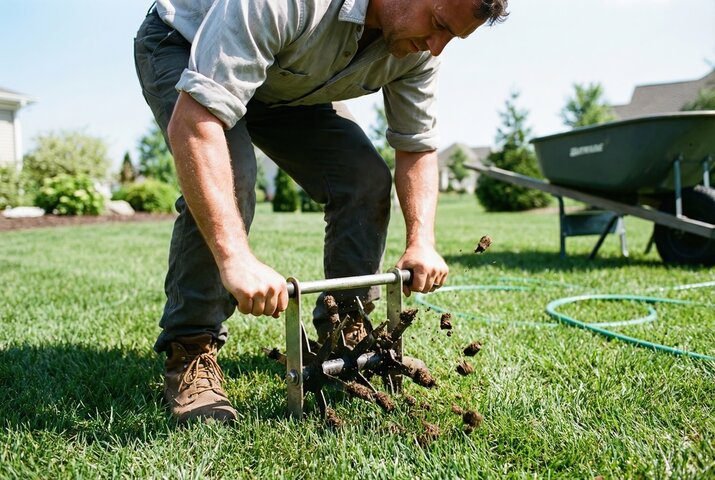
Core aeration is the process of mechanically removing small plugs of soil from the lawn to relieve compaction and allow air, water, and nutrients to penetrate deeper into the root zone. For many Richmond homeowners, aeration is not just a recommended service. It is a foundational part of long-term lawn health.
Lawn Popper’s, a locally operated lawn care and landscaping company based in Richmond, Virginia, provides professional aeration and overseeding services designed specifically for the region’s soil and climate. Understanding why aeration matters in this area starts with looking at what makes Richmond lawns different.
Richmond’s Clay Soil and Compaction Issues
Richmond-area lawns are often built on dense clay soil. While clay can hold nutrients well, it also compacts easily. Foot traffic, mowing equipment, pets, and even rainfall can press soil particles tightly together, reducing the space needed for oxygen and water movement.
Compacted clay soil limits root expansion. Grass roots struggle to grow deep, leaving turf vulnerable to drought, heat stress, and disease. In neighborhoods throughout Glen Allen, Short Pump, and Tuckahoe, compacted lawns frequently appear thin, patchy, or slow to green up in spring.
Common signs of soil compaction in Richmond lawns include:
- Water pooling after rainstorms
- Hard, difficult-to-penetrate soil
- Thin or bare patches in high-traffic areas
- Grass that wilts quickly in summer heat
- Increased weed pressure
Core aeration directly addresses these issues by physically removing small plugs of soil. These openings reduce pressure in the root zone and create channels for improved airflow and moisture absorption. In areas with heavy clay, this mechanical relief is essential for maintaining turf density.
Without aeration, clay soil gradually becomes more restrictive. Even lawns that receive regular mowing and fertilization can decline if roots cannot access oxygen and nutrients. For homeowners in Richmond and nearby communities, proactive aeration helps prevent long-term soil degradation and supports a healthier lawn year after year.
How Core Aeration Boosts Root Growth
Strong roots are the foundation of a resilient lawn. In Central Virginia’s transitional climate, where summers are hot and humid and winters can fluctuate, grass needs deep root systems to withstand stress.
Core aeration stimulates root growth by loosening compacted soil and increasing pore space. These pockets allow roots to expand downward and outward, seeking water and nutrients more efficiently. Over time, this results in thicker turf and improved drought tolerance.
Key root-related benefits of aeration include:
- Increased oxygen availability in the soil
- Deeper root penetration
- Enhanced nutrient uptake
- Improved microbial activity
- Stronger resistance to heat and disease
When soil is compacted, roots often remain shallow. Shallow roots dry out quickly during Richmond’s summer heat waves. By contrast, aerated lawns develop deeper root systems that help maintain color and vigor even during dry spells.
Lawn Popper’s performs core aeration using professional equipment that removes uniform soil plugs across the lawn surface. This ensures consistent coverage and maximizes root-zone benefits. When combined with overseeding and proper fertilization, aeration becomes a powerful tool for revitalizing tired lawns throughout Mechanicsville, Midlothian, and Chester.
Improving Drainage After Heavy VA Rains
Richmond is no stranger to intense rain events. Thunderstorms, tropical systems, and prolonged rainy periods can saturate lawns quickly. In compacted clay soils, excess water has nowhere to go, leading to standing water and potential root damage.
Poor drainage can suffocate grass roots by limiting oxygen availability. Prolonged saturation also encourages fungal diseases and weakens turf density. Homeowners often notice soggy patches or muddy areas that take days to dry.
Core aeration improves drainage by:
- Creating vertical channels for water movement
- Breaking up compacted soil layers
- Reducing surface runoff
- Allowing faster drying after storms
- Minimizing erosion in sloped yards
By allowing rainwater to infiltrate more effectively, aeration reduces the likelihood of pooling and surface runoff. This is especially beneficial for properties with gentle slopes or heavy clay subsoil, common throughout Goochland and Glen Allen.
Improved drainage not only protects grass roots but also enhances the performance of fertilizers and soil amendments. Instead of washing away, nutrients are better absorbed into the soil profile. This results in more efficient lawn care and improved overall turf health.
Why Fescue Lawns Need Annual Aeration
Tall fescue is the dominant cool-season grass in the Richmond region. It performs well in Virginia’s climate but requires specific maintenance practices to stay dense and attractive. One of the most important is annual core aeration.
Fescue does not spread aggressively like warm-season grasses. It grows in clumps, meaning bare spots do not fill in naturally. When soil becomes compacted, fescue struggles to maintain thickness, and thinning areas appear.
Annual aeration supports fescue lawns by:
- Reducing compaction stress
- Encouraging deeper root development
- Improving seed-to-soil contact during overseeding
- Enhancing nutrient absorption
- Promoting thicker, more uniform growth
Early fall is typically the optimal time for aeration and overseeding in the Richmond area, as cooler temperatures and consistent moisture create ideal growing conditions. However, Lawn Popper’s evaluates each property individually to recommend the best timing.
In neighborhoods across 23233 and 23114, fescue lawns that receive yearly aeration consistently outperform those that do not. They exhibit better color retention, improved drought tolerance, and reduced weed intrusion. For homeowners who value a lush, green lawn, aeration is not optional. It is a necessary annual practice.
Reducing Thatch Buildup in Local Yards
Thatch is a layer of organic material that accumulates between the grass blades and the soil surface. While a thin layer can be beneficial, excessive thatch restricts water, air, and nutrient movement.
In Richmond’s humid climate, thatch can build up more quickly, particularly in lawns that receive frequent fertilization or irrigation. Excessive thatch creates a barrier that prevents roots from accessing the soil below.
Core aeration helps manage thatch by:
- Breaking up compacted organic layers
- Introducing soil microbes that decompose debris
- Improving contact between soil and turf roots
- Enhancing water penetration through the surface
- Reducing the risk of pest and disease issues
As soil plugs break down after aeration, they reintroduce beneficial microorganisms to the thatch layer. These microbes accelerate decomposition and help restore balance to the lawn ecosystem.
For homeowners in Tuckahoe, Midlothian, and Chester, addressing thatch buildup early can prevent more intensive corrective treatments later. Aeration offers a proactive solution that supports long-term lawn vitality.
Preparing Richmond Lawns for Overseeding
Overseeding is one of the most effective ways to thicken fescue lawns and repair summer damage. However, overseeding without aeration often yields disappointing results. Seeds need direct soil contact to germinate successfully.
Core aeration creates ideal conditions for overseeding by opening the soil surface and improving seed placement. The small holes left behind act as protected pockets for grass seed, shielding them from wind and runoff.
Benefits of combining aeration with overseeding include:
- Improved seed-to-soil contact
- Higher germination rates
- Faster establishment
- Reduced competition from weeds
- Thicker, more uniform turf
In Richmond’s transitional climate, fall overseeding following aeration helps lawns recover from summer stress and prepare for winter dormancy. By spring, these lawns typically exhibit fuller growth and stronger root systems.
Lawn Popper’s provides coordinated aeration and overseeding services for homeowners throughout the Richmond region, including Mechanicsville, Goochland, and Glen Allen. This integrated approach ensures that new seed has the best possible environment for success.
Beyond aeration and overseeding, Lawn Popper’s offers mowing, mulch installation, shrub trimming, seasonal yard cleanups, and exterior power washing to help maintain attractive, well-kept properties across the region. Whether addressing soil health or enhancing curb appeal, consistent professional care supports long-term results.
Regular core aeration is not simply a one-time improvement. It is an investment in the structural integrity of your lawn. In Richmond’s clay-heavy soils and variable weather conditions, annual aeration provides the foundation for healthier roots, improved drainage, and thicker turf. For homeowners seeking dependable lawn care tailored to Central Virginia’s unique environment, Lawn Popper’s delivers service backed by local experience and attention to detail.
Frequently Asked Questions
How often should I aerate my lawn in Richmond, VA?
Most tall fescue lawns in Richmond benefit from core aeration once per year, typically in early fall. Annual aeration helps relieve soil compaction caused by clay-heavy soils and regular foot traffic. Lawn Popper’s serving the Richmond area evaluates each property’s soil condition and usage patterns to recommend the most effective schedule for long-term lawn health.
What is the best time to aerate and overseed in Central Virginia?
Early fall is generally the ideal time for aeration and overseeding in Central Virginia. Cooler temperatures and consistent moisture create favorable conditions for tall fescue seed germination and root development. Lawn Popper’s provides coordinated aeration and overseeding services throughout Richmond and nearby communities to maximize results during this key growing season.
Will core aeration help with standing water in my yard?
Core aeration can significantly improve drainage in lawns affected by compacted clay soil. By creating channels that allow water to penetrate deeper into the ground, aeration reduces surface pooling after heavy rains. Lawn Popper’s serving Richmond and surrounding areas uses professional equipment to improve infiltration and support healthier turf growth.
Is core aeration necessary for newer lawns?
Even newer lawns in the Richmond area can develop compaction within a few years due to clay soil and regular use. Aeration helps maintain healthy root systems and prevents long-term soil issues before they become severe. Lawn Popper’s assesses lawn age, soil density, and turf condition to determine whether aeration would be beneficial.
What other services pair well with aeration?
Aeration is often combined with overseeding, fertilization, and seasonal yard cleanup for comprehensive lawn improvement. Lawn Popper’s offers mowing, mulch installation, shrub trimming, and exterior power washing throughout the Richmond region to help homeowners maintain clean, attractive properties in every season.
Does aeration make a mess of the lawn?
Core aeration leaves small soil plugs on the lawn surface, which naturally break down within a couple of weeks. These plugs return nutrients to the soil and support microbial activity. Lawn Popper’s ensures even coverage and explains what homeowners can expect so there are no surprises after service.
How do I know if my lawn has compacted soil?
Signs of compacted soil include water pooling, thin turf, difficulty inserting a screwdriver into the ground, and increased weed growth. Many Richmond-area lawns experience compaction due to clay soil and regular traffic. Lawn Popper’s can evaluate your property and recommend aeration if compaction is limiting lawn performance.
Do you provide lawn care services outside Richmond city limits?
Yes. Lawn Popper’s is based in Richmond, Virginia and serves homeowners throughout nearby communities including Mechanicsville, Midlothian, Chester, Goochland, Tuckahoe, Short Pump, and Glen Allen. Services include aeration, overseeding, mowing, landscaping maintenance, seasonal cleanups, and exterior power washing tailored to the region’s climate and soil conditions.